
After her cousin died in Ukraine, a Bethesda activist set out to document what happened
When singer-songwriter Kelsie Kimberlin of Bethesda visited Ukraine in the early 2020s to film music videos, her younger cousin Andrii Rachok (she called him by his nickname, Andrusha) was never far from her side. They had bonded as children, filling Kimberlin’s frequent trips to Ukraine, where her mother was born, with adventures in the countryside.
So when Rachok told her in 2023 that he had decided to enlist in the Ukrainian armed forces to fight against the Russian invasion, Kimberlin tried to dissuade him. The two argued, and it was one of the last times they spoke. He joined the service that year and was 21 when he was killed on the front lines in February 2024 during a Russian airstrike.
“Every Ukrainian has an Andrusha story,” says Kimberlin, now 26.
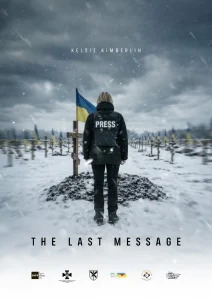
Kimberlin’s October 2024 journey to visit Rachok’s grave and the front lines of the Russia-Ukraine war is the focus of the documentary The Last Message, which Kimberlin worked on and starred in, and which shows her in the studio writing music. She made the film to amplify Ukrainian voices on the front lines, to advocate for continued U.S. support and to showcase the resilience of the Ukrainians. Kimberlin says the film was funded by donations from several organizations, many of which are based in Ukraine.
The pop singer-songwriter regularly intertwines her art with personal causes. She’s penned songs about women, gun violence and LGBTQ+ community rights. Her YouTube channel has more than 200,000 subscribers, with multiple videos topping 1 million views.
“I feel like when you have music and you add politics into it, it kind of makes ita little more lighthearted, and people understand a little bit more, versus going to listen to some newscaster guy being like, ‘This is what happened today,’ ” Kimberlin says.
Kimberlin filmed three music videos for her songs in Ukraine in 2023 after the invasion and revisited the country in September 2025 to film for her song “Dream of Peace,” which she says premiered at the Concert for Peace at International Peace Day in Los Angeles that month.
Kimberlin’s path to The Last Message began in 2024, when she targeted some Republicans in the U.S. House of Representatives in an Instagram video after they voted to withhold funding from Ukraine. Her words caught the attention of Ukrainian filmmakers familiar with her work in the country, who said they’d like to help her document life on the front lines. In the film, she interviews activists, soldiers, famous Ukrainian figures and everyday people.
“Where I fought through song and video, he took up arms to defend Ukraine,” Kimberlin says in the film when speaking about her cousin.
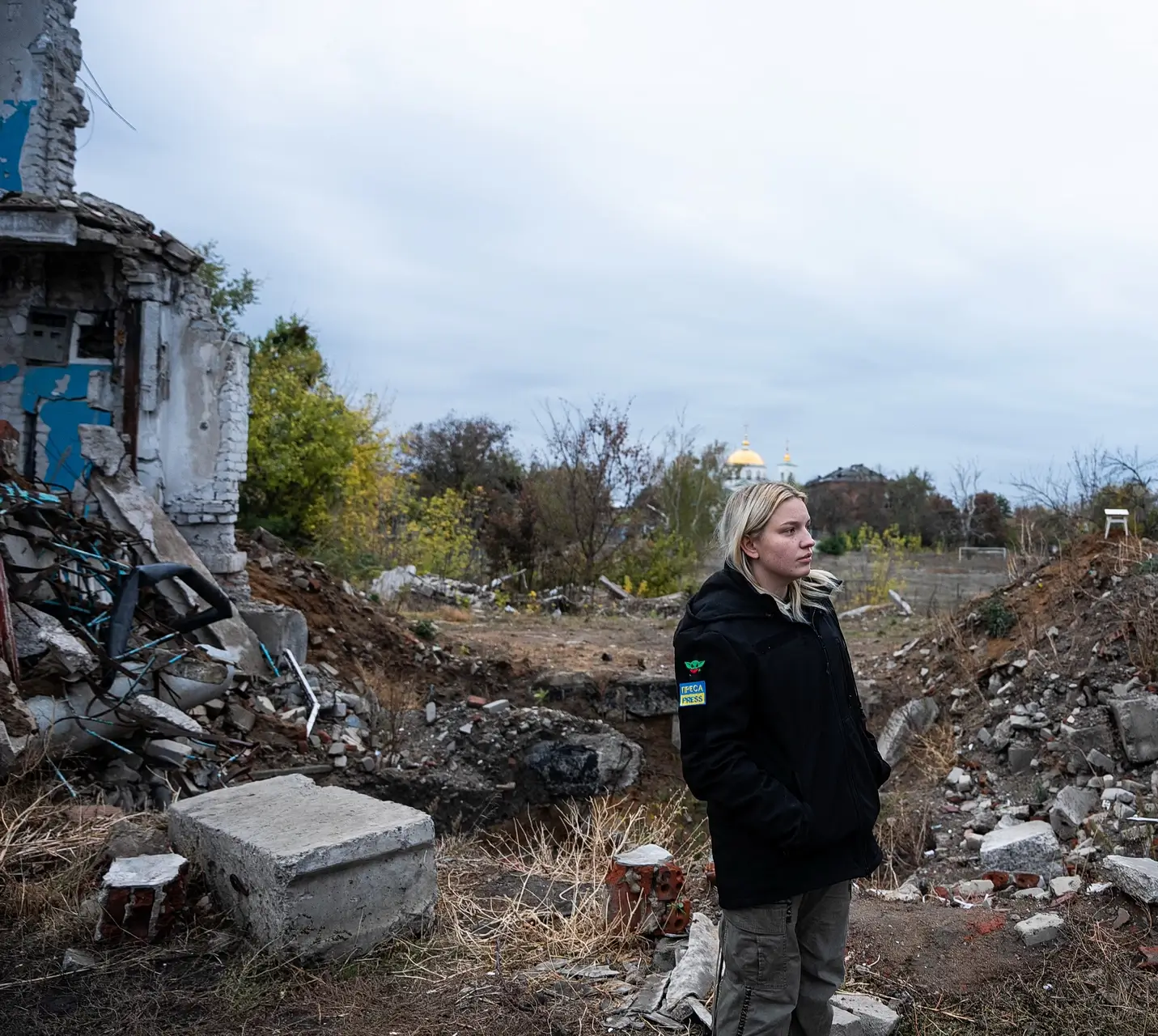
Through drone, cellphone and professional camera footage, Kimberlin tracks her journey to visit her cousin’s grave. She worked with a production company based in Ukraine and says she received access to ride along with Ukrainian special forces to film in a war zone, showing the depth of the damage to infrastructure from the war— homes, schools, churches, hospitals—while navigating real-time threats to her safety from attacks. During her travels, she helped evacuate her and Rachok’s grandparents from the village of Raipoli following the threat of increased bombings.
A letter to the World: “It has been one year since an unjust war struck my beloved Ukraine”
Kelsie Kimberlin Filming for Peace
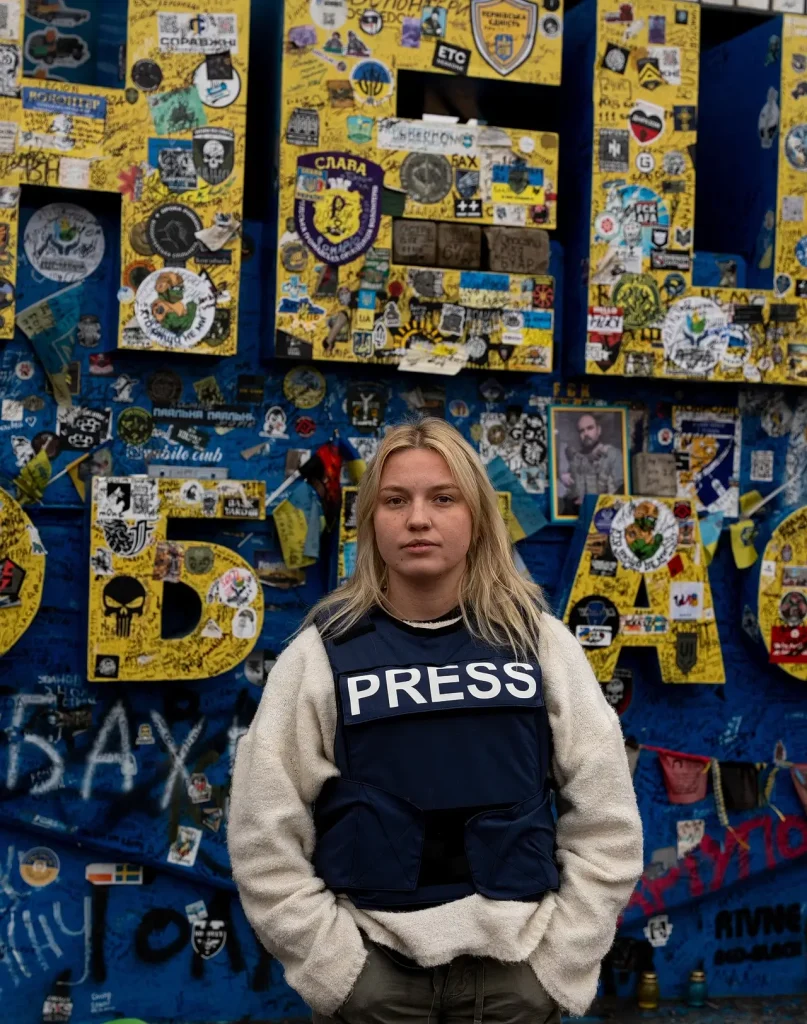
Below: Kimberlin at the famous stele—adorned with flags and patches from Ukrainian military divisions—at the entrance of the Donetsk region
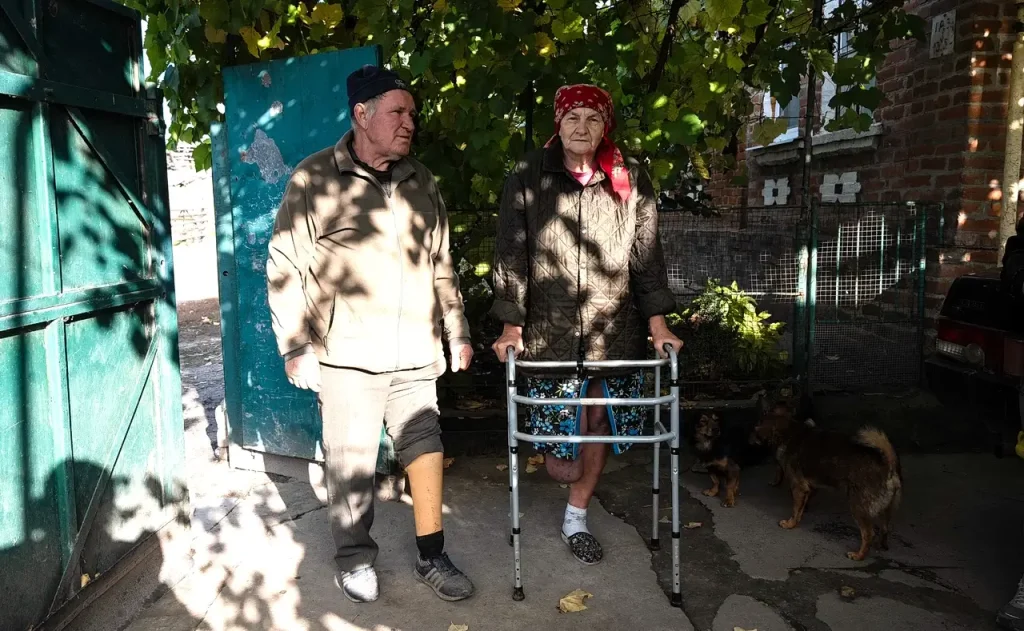
Speaking with a Ukrainian woman who lost her leg to a mine
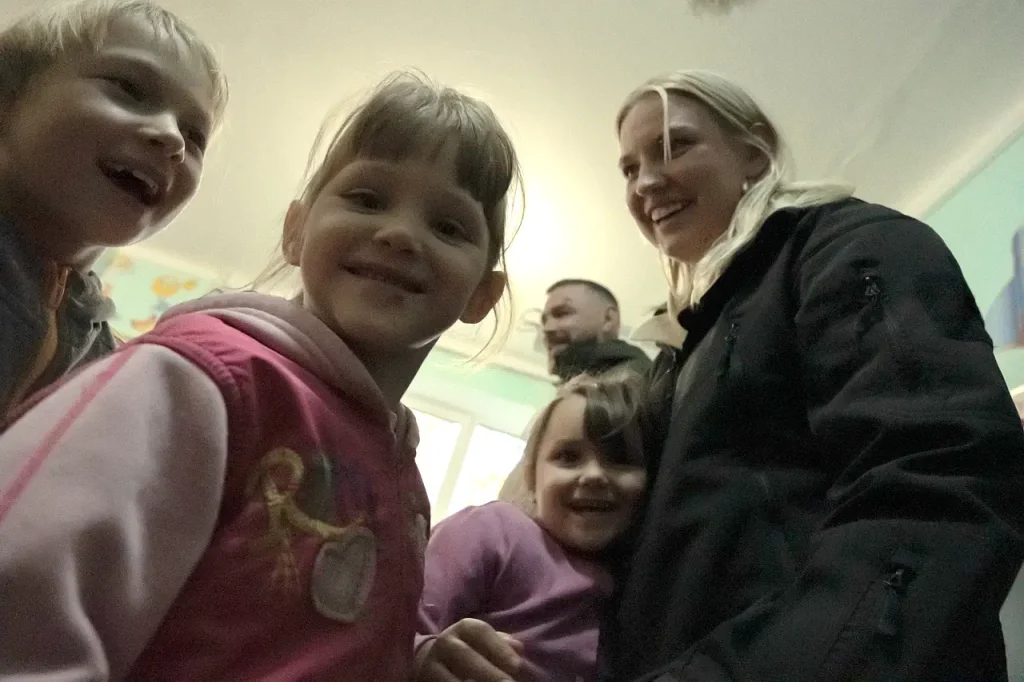
Visiting with children at a Ukrainian orphanage close to the front line
In presenting the horrors of war, Kimberlin says she wants The Last Message to be a story of resilience. Parallel to the destruction, film footage captures sunny open fields and relics of the history of Ukraine. “The craziest thing about Ukraine … despite them being in the middle of a war, they have cleaner streets than we do. And they take care of everything. They keep it clean, no matter what. If there’s debris and something goes off, there are people putting in efforts to immediately clean their country,” Kimberlin says. “Even on the front lines, there’s mom-and-pop shops making meals for people and soldiers.”
Andrii Samerkhanov, a producer on the film who lives in Ukraine, says, “Kelsie is like a fire. When we put out a message for anyone to hear us and share our voices [after the invasion], we found Kelsie.” He says Kimberlin became a prominent activist in Ukraine and speaks in awe of her bravery to arrive at the front lines. “She’s become a national figure here, everyone knows her,” Samerkhanov says.
Outside of filmmaking, Kimberlin’s support of Ukraine includes working with families and schools as they rebuild their communities following Russian attacks, visiting with Ukrainian amputees at Medical Center Orthotics & Prosthetics in Silver Spring, and shining a spotlight on notable Ukrainian figures through interviews she posts on YouTube.
Kimberlin hopes The Last Message will be included in upcoming film festivals. Through the film, she wants to confront political apathy toward the war in Ukraine. She hopes viewers will see the dire need for aid and take action to support the country. “I wanted to bring light to what’s actually happening and what’s being overshadowed by showing people’s truth, resilience and actual stories [in Ukraine],” she says. “My main goal is to wake people up and ask, what side of history do we want to be on?”

Filming on the ground and capturing raw truth takes incredible bravery. Thank you for using film as a medium to stand for peace and amplify these vital stories. 🕊️✨
Hi Kelsie – thanks for making this video not only as a tribute to your cousin but a frank portrayal of what we at the front lines experience daily, not in Kyiv or Lviv, but in Donetsk, the cities of Kramatorsk, Slovyansk and Druzhkivka, holding out against a daily onslaught. Your video is stripped of the drama and gets right to the heart. While I am an American, my mates are all Ukrainian, my friends, my adopted country.
Keep singing your heart out for these people, this country. They are dying for us every day.
Hi Peter! Thank You!
The behind-the-scenes footage looks amazing! You can really see how much passion, effort, and genuine emotion went into every shot. “Filming For Peace” isn’t just a project—it’s a true manifesto that the world needs right now. Huge respect to the entire team! 🎬❤️
Thanks Greta!
Kelsey, thank you for your creativity and for using your voice for such an important cause! Music and art truly have the power to bring people together when words fail. The video promises to be incredibly powerful and profound. We can’t wait for the premiere! 🕊️✨
Thanks Sara!
What stood out to me was how the documentary connects a deeply personal loss with the broader reality many Ukrainian families have faced. Sharing Andrusha’s story through both film and music gives people outside the conflict a more human understanding of its impact, and that’s an important perspective to preserve.
Thanks Lora!